This is one of the most common questions we get. A homeowner notices a leak, calls a roofer, and gets told they need a whole new roof. But is that actually true? Sometimes yes. Sometimes a repair is the right call. Here's how to think through it.
Start With the Age of the Roof
Age is the single biggest factor in the repair-vs-replacement decision. If your roof is under 15 years old and in otherwise decent condition, a repair usually makes sense. You still have a lot of life left in the shingles and the underlying system, and fixing an isolated problem is the smart financial move.
If your roof is 18 to 20 years old or more, the calculation changes. At that age, the whole roof is approaching the end of its useful life. Paying to repair one problem often means another problem shows up six months later, then another the year after that. At some point you're spending money to delay the inevitable.
How Widespread Is the Damage?
A single area of damage is very different from damage spread across the roof. If you have one section where shingles are missing or a flashing detail failed, that's a repair. If you've got issues in three or four different spots, that usually means the roof as a whole has reached a point where it's just starting to fail in multiple places at once.
When we do an inspection, we look at the whole roof, not just the spot that's leaking. Sometimes what looks like a single problem from the inside is actually a symptom of broader deterioration on the outside.
What Does the Decking Look Like?
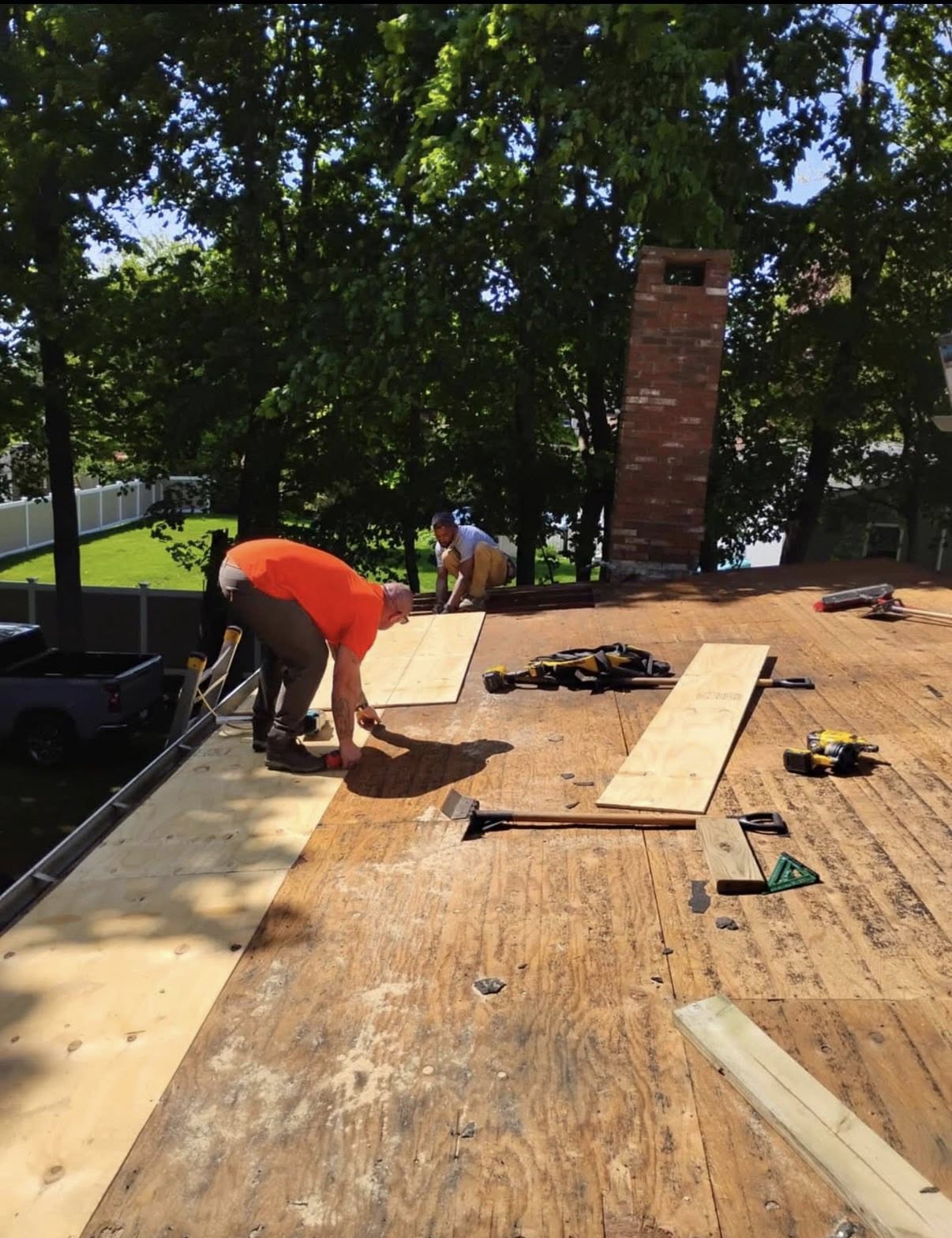
The decking is the plywood underneath the shingles. If moisture has been getting in for a while, the decking can rot or soften. Once the decking is compromised in multiple areas, a repair on top of it is just covering up a structural problem.
You can't always tell from the outside. That's one reason a professional inspection matters. When we get up on a roof we can feel soft spots in the decking that you'd never see from the ground or even from inside the attic.
A good repair fixes the actual problem. If a contractor wants to patch shingles without addressing the underlying cause of the leak, that's not a repair. That's a bandage that will fail again.
Have You Repaired This Roof Before?
One repair is normal. Two repairs starts to raise questions. If you've had the same roof repaired two or three times in the past few years, you're in diminishing returns territory. The money you've spent on repairs is gone, and the roof is still aging. At some point a replacement is just the better investment.
Think about it this way: if your car needed a $2,000 repair every year for three years, at some point you'd start asking whether it makes more sense to buy a different car. Same logic applies to a roof that keeps having problems.
Is This an Insurance Claim?
Storm damage is a different situation. If a nor'easter took shingles off or a falling branch damaged part of your roof, your homeowner's insurance may cover the repair or replacement. In that case, the repair-vs-replacement decision is partly driven by what the insurance adjuster determines.
If you think you have storm damage, document everything with photos before anyone goes on the roof, and call your insurance company before authorizing any work. We've worked with homeowners going through the claims process and can help you understand what you're looking at.
The Honest Answer
Here's what we tell every homeowner who asks us this question: we'll tell you the truth about what we see. If a repair will genuinely solve your problem and buy you meaningful time, we'll recommend a repair. We're not in the business of selling replacements people don't need.
But if the roof is at or near the end of its life and a repair is just going to kick the problem down the road, we'll tell you that too. You deserve to make an informed decision, not one based on a contractor's incentive to sell you the bigger job.
We do both roof repairs and roof replacements across Somerset, Swansea, Rehoboth, Westport, and Seekonk. Call us at 508-989-8383 or request a free estimate and we'll give you a straight answer about where your roof stands.